
WSHP Case Studies
HP Federation members have provided a number of notable water source installations. A number of interesting case studies are highlighted below. They show that water source heat pumps can provide the best heating solution for buildings of all sizes.
A WSHP can provide heating successfully to old buildings as well as new, to buildings in towns as well as buildings in the country, and to factories, hospitals and schools as well as to homes.
Queens Quay Heat Pump scheme, Clydebank
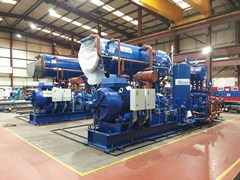
The Queens Quay Heat Pump scheme, which is the largest of its kind in the UK, will take heat from the River Clyde to heat local homes and businesses. The project will demonstrate the use of large-scale heat pump projects in the UK.
The Queens Quay development in Clydebank will transform the former John Brown Shipyard from an industrial landscape to a vibrant, diverse and architecturally engaging community. The plans for the 23 hectare site will create 1,000 private homes, 200 rented homes and the associated infrastructure to support them such as a health centre, care home and commercial facilities.
The project will feature Scotland's first major Water Source Heat Pump, taking heat from the River Clyde and distributing it to customers through a district heating network.
The project is being completed by Vital Energi using heat pumps built by Star Renewable Energy in Glasgow.
Balanced Energy Networks, London
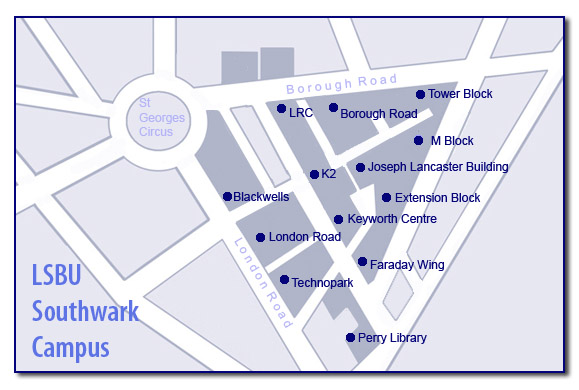
Innovate UK has awarded £2.9m towards the £4m BEN Consortium which has built a Balanced Energy Network at London South Bank University to demonstrate innovations in integrated energy supply chains, including water source heat pumps.
The Balanced Energy Network incorporates a heat sharing network which is designed to provide a more cost effective, flexible, and scalable alternative to conventional district heating network technology. Heat sharing networks transfer warmth via piping circuits between buildings at near ground temperature and extract it via heat pumps in each building: fifth generation district heating and cooling networks.
Buildings which need cooling use heat pumps to reject heat to the ground circuit – to the benefit of those that need heating.
The buildings in the network contribute to load balancing of the Grid, and earn revenue, by using Demand Side Response across the Internet of Things.
On 6 November 2018 the Balanced Energy Network was announced as the winner of The Engineer's Collaborate to Innovate Award in the Energy and Environment category for its Fifth Generation District Heat Network.
Robinson College, Cambridge
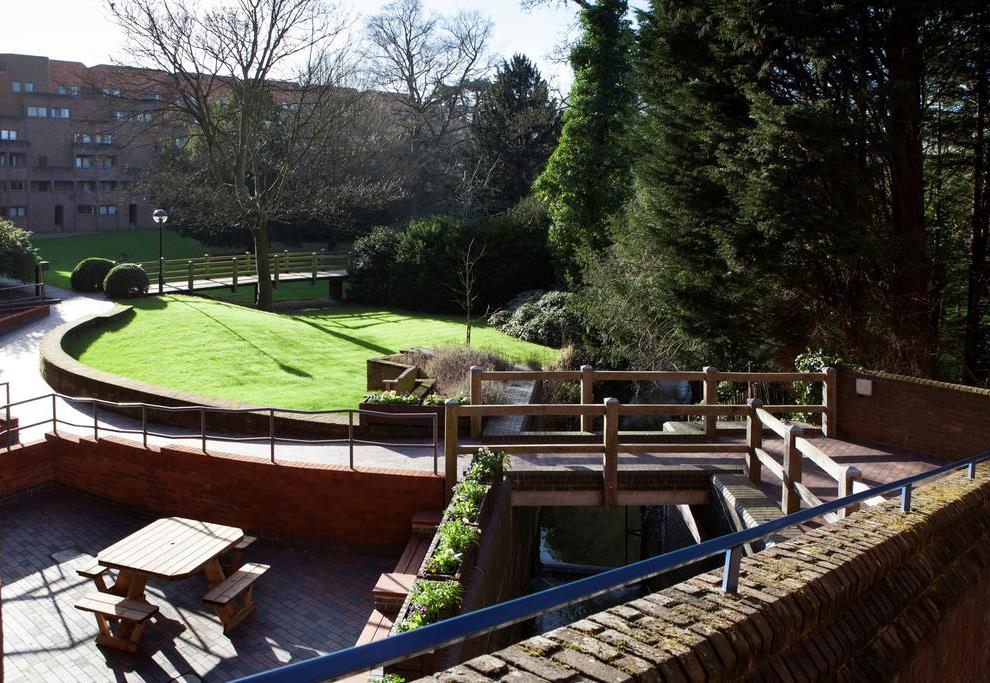
A surface water heat pump at Robinson College transfers heat from Bin Brook to heat the college in winter and provide hot water all year round. Heat pumps and seasonal thermal energy storage with a sophisticated energy management system provides a totally automated system that balances the temperature in the building by heat exchange with the stable temperature of the water in the brook that runs through the college gardens.